Texture & Temperature.
The sensory physics of dairy fat: why thermal transitions awaken volatile aroma compounds and transform brittle curd into pure silk.
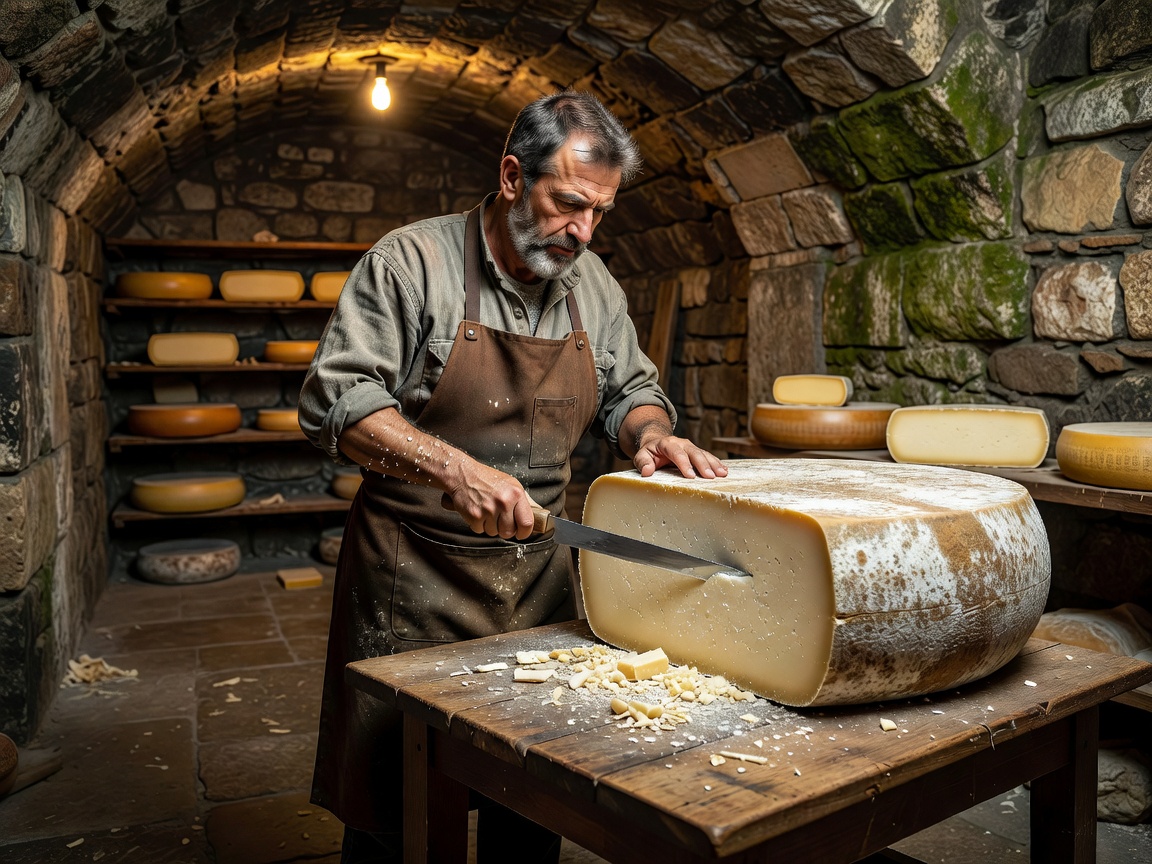
The Thermal Threshold of Milkfat
Milk fat contains a complex spectrum of triglycerides with distinct melting points ranging from 10°C to 38°C. When cheese is served straight from a refrigerator (typically 4°C), those fats remain solid and waxy. The cold temperature numbs human taste receptors and traps volatile esters inside the crystalline lipid structure.
"Tasting cold cheese is like viewing a master painting through frosted glass: the structure is visible, but the vibrant colours are lost."
What Happens During Tempering
As the wheel reaches room temperature (18°C – 20°C), three critical events occur:
- Emulsion Softening: Low-melting fats liquefy, releasing delicate creaminess onto the tongue and lowering the friction of chewing.
- Aroma Volatilization: Trapped short-chain fatty acids vaporize into the ambient air, allowing retronasal olfaction to detect notes of pasture clover, hazelnut, and cultured cream.
- Acidic Moderation: Lactic sharpness softens into rounded umami broth notes.